Magazine

Azele Studio. Handmade rugs. Moroccan rug patterns.

Moroccan Rug Patterns: Symbols and Meanings

Last reviewed:

SHARE:

Across Morocco’s mountains, deserts, and plains, rugs do more than warm a room. They speak. Every line, curve, and symbol holds meaning. Understanding Moroccan rug patterns and meanings reveals whispers from artisans, prayers for protection, and tales of memory. Furthermore, these motifs form an unwritten language that Berber weavers have passed down for generations.

Table of Contents

Reading the Thread: Motifs, Patterns, and Symbols

Before exploring their deeper meaning, it helps to distinguish three foundational elements:

  • Motifs are the individual decorative elements—shapes, figures, or geometric forms—that may repeat or stand alone. Think lozenges, diamonds, stars, or stylized plants.
  • Patterns are the structured arrangements of these motifs across the rug’s surface. They can be symmetrical, centralized, flowing, or abstract.
  • Symbols represent the cultural or spiritual meaning attached to a motif, passed down through generations of oral tradition.

Together, these elements form a visual language woven by hand.

A Tradition Woven from Memory

Moroccan rug patterns are deeply rooted in the oral traditions of Amazigh (Berber) women, who have passed their symbolic knowledge from mother to daughter through weaving. Each knot holds a message, a protection rite, a memory, or a spiritual intention. These designs are not arbitrary—they are meditations, rituals, and lived stories encoded into wool.
Over time, various cultural influences shaped the symbolic vocabulary of rug design. Some symbols carry sacred meaning, others invoke ancestral spirits or tribal identity. Some shift by region, others are personal expressions. All reflect a deep bond between maker, landscape, and legacy.

Motifs in Moroccan and Berber Rugs

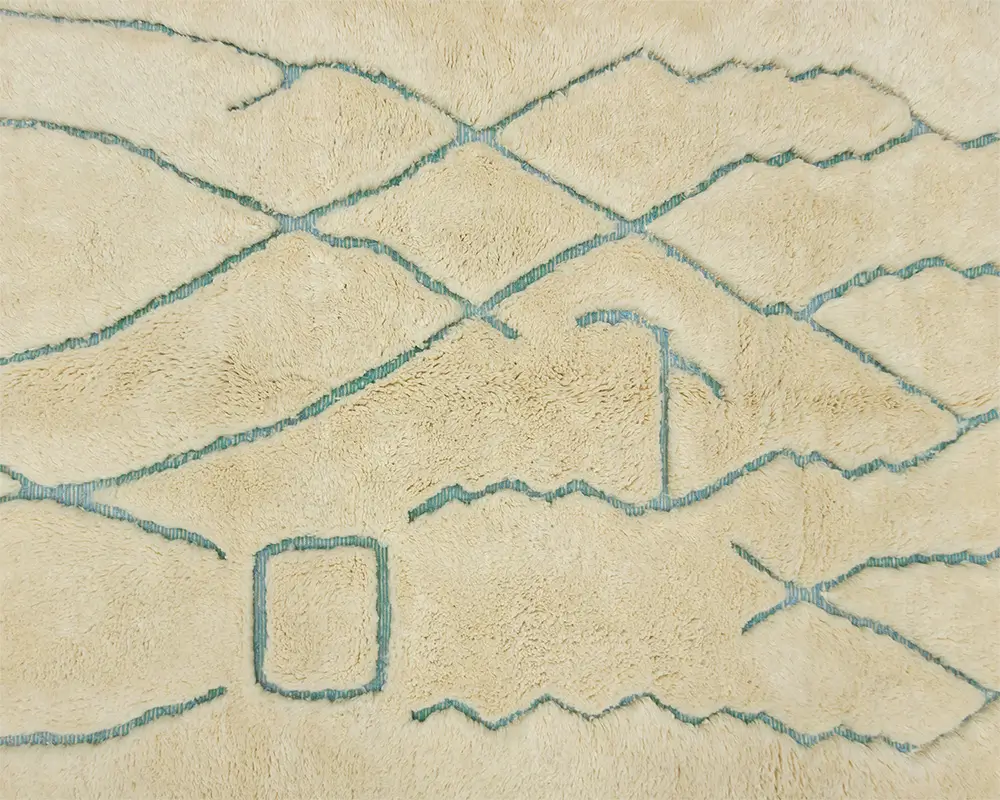
Azele Studio. Handmade rugs. Moroccan rug patterns

Here are some of the most enduring Berber rug motifs, each with its own aesthetic and symbolic identity:

  • Lozenge: A central feminine symbol representing fertility and the womb.
  • Diamond: Used to signify wholeness, protection, or sacred boundaries.
  • Triangle: Pointed down for femininity, up for masculinity; paired to suggest balance or duality.
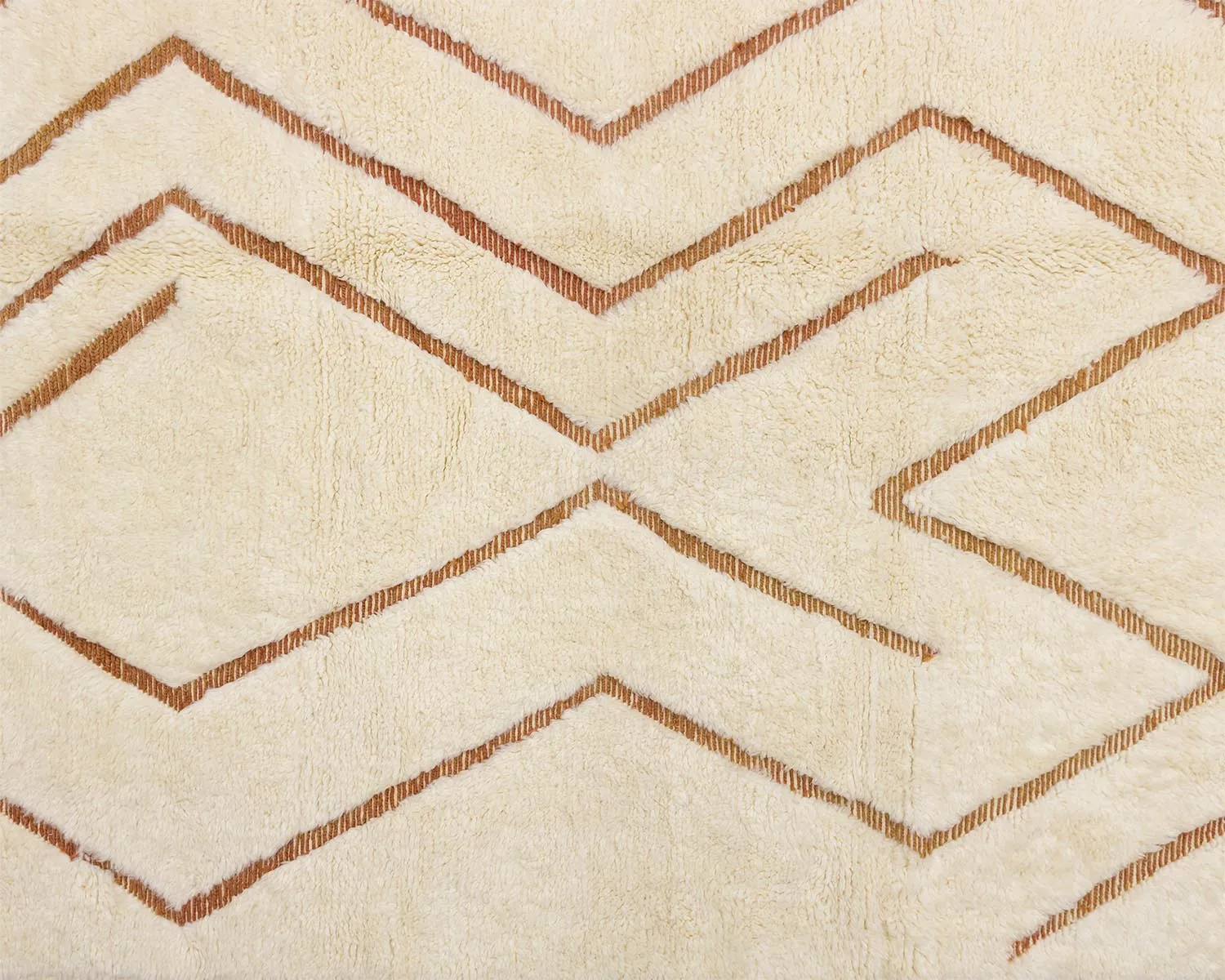
  • Chevron: V-shaped markings representing progress, direction, or growth.
  • Zigzag: Evokes rivers, transitions, or the winding nature of life.
  • Grid / Checkerboard:  Represents social harmony and protective order.
  • Hourglass: Suggests the passage of time, life cycles, or impermanence.
  • Spider or Web: A nod to the weaver herself; symbols of feminine creativity and wisdom.
  • Tifinagh Letters: Characters from the Amazigh alphabet used to embed identity or origin.
  • Amulets: Small repeated motifs believed to offer spiritual protection.

Patterns: Structures of Meaning

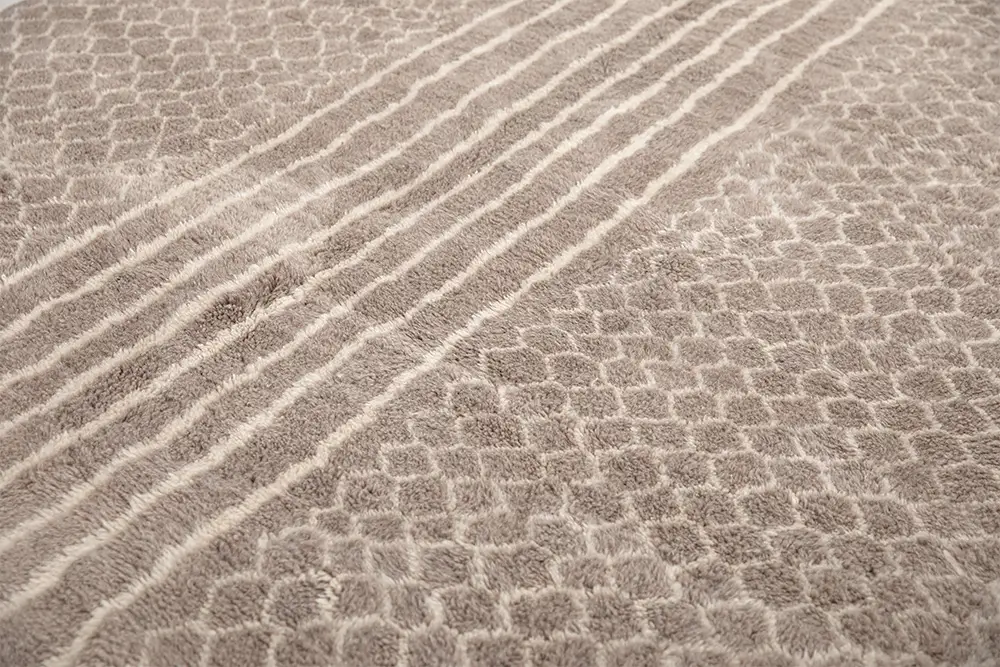
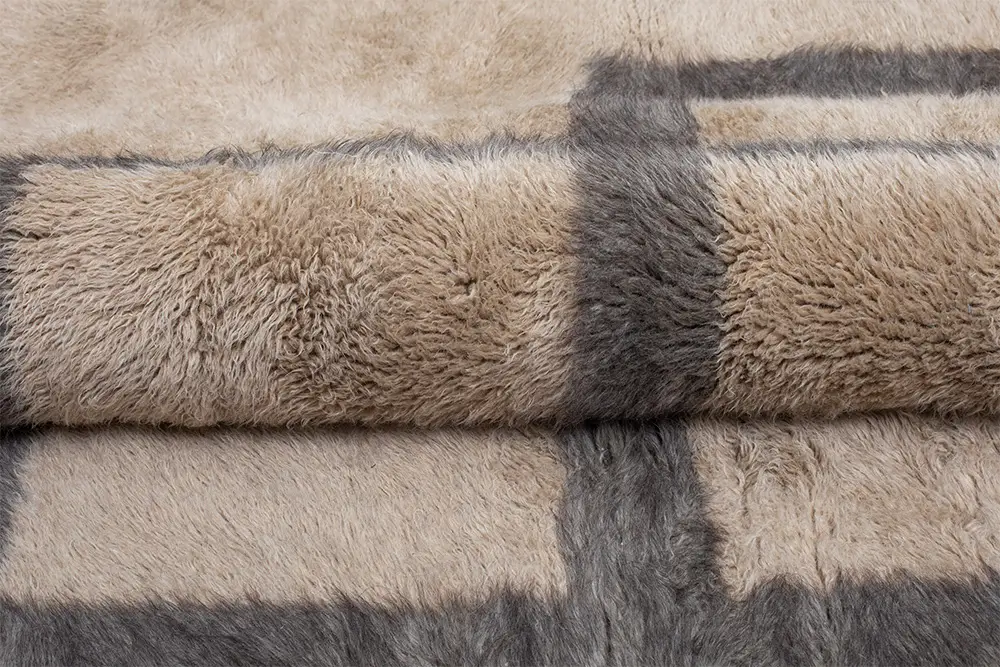
Azele Studio. Handmade rugs. Moroccan rug patterns. Gray striped rug geometrical rug

Patterns determine how motifs are arranged and interact across the rug. Each structure carries visual rhythm and narrative function. Key Moroccan rug patterns include:

All-Over – Repeating motifs that fill the rug without a central focus; common in tribal and nomadic styles.

Medallion-Centered – A dominant central motif surrounded by complementary forms; sometimes seen in urban or Arab-influenced weavings.

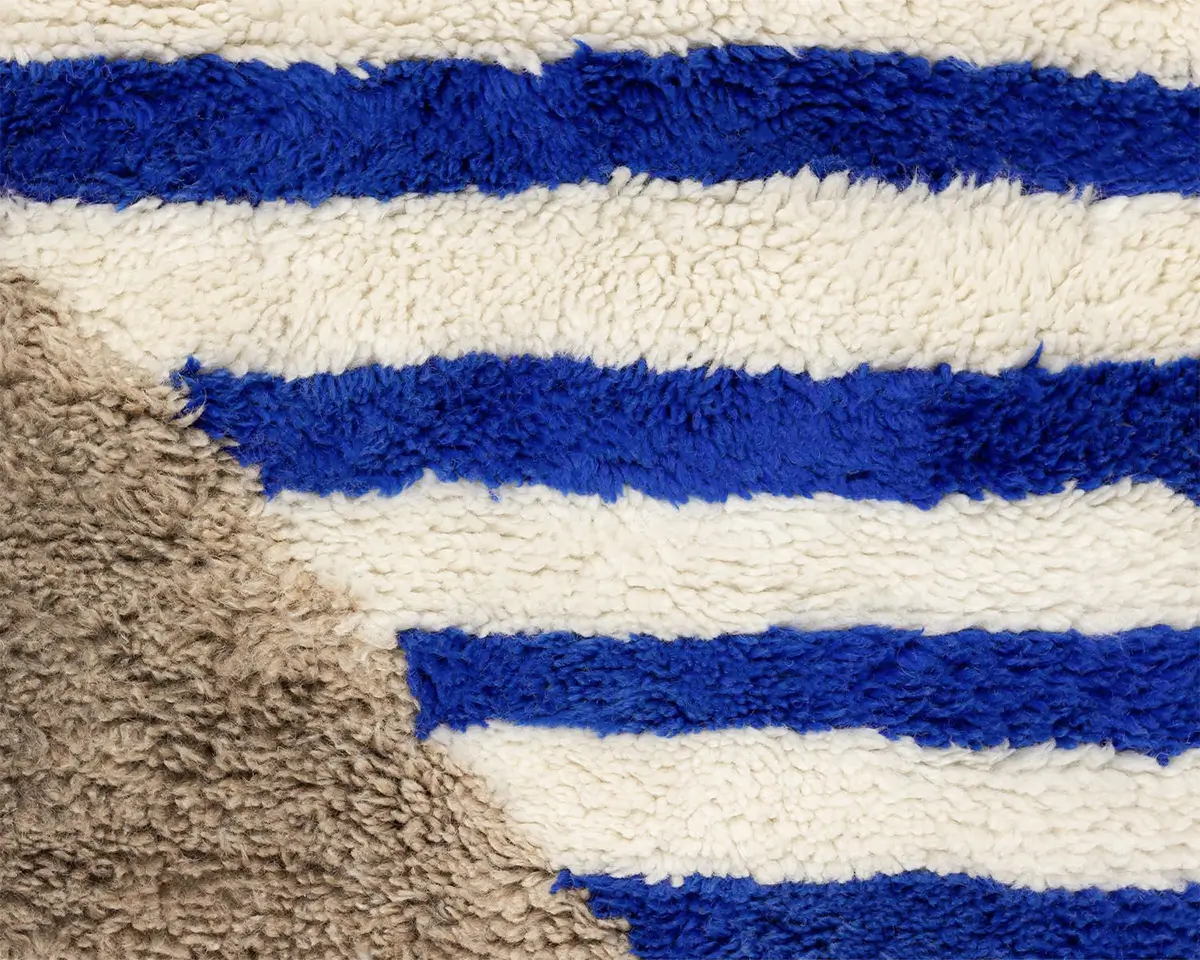
Striped or Banded – Linear motifs framed by solid rows; typical in Zanafi and Kilim weaving.

Asymmetrical Layouts – Found in Azilal rugs; intuitive, emotional compositions with expressive balance.

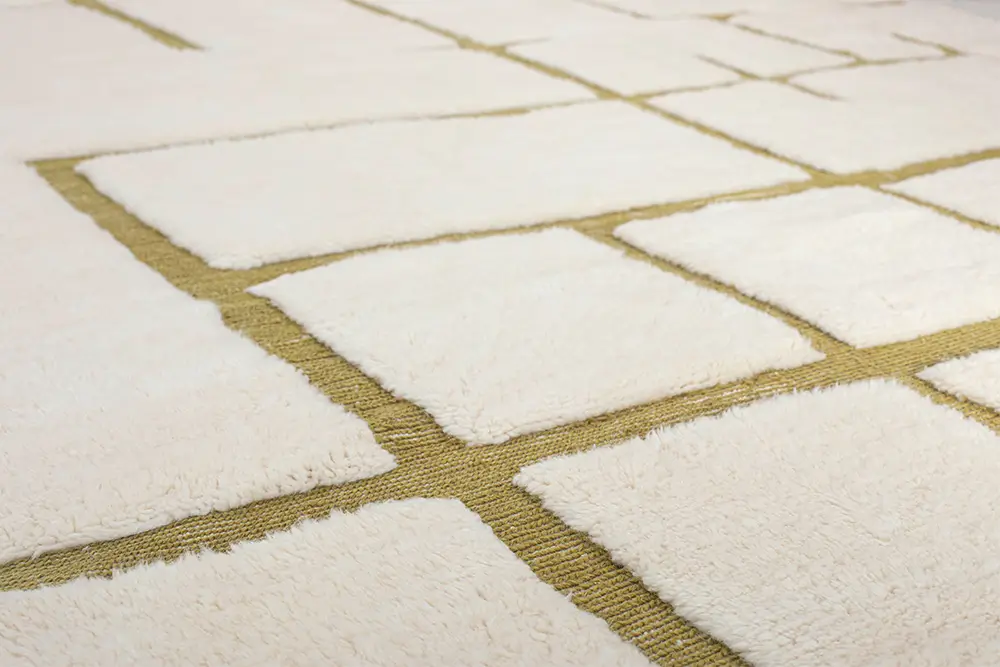
Geometric Grids – Regular formations that symbolize containment, clarity, or order.

Freeform Abstracts – Spontaneous, modern interpretations that blend old symbols with new voices.

Patterns shape not only the design, but the feeling a rug brings into a space.

Symbols with Stories: A Glossary of Meaning

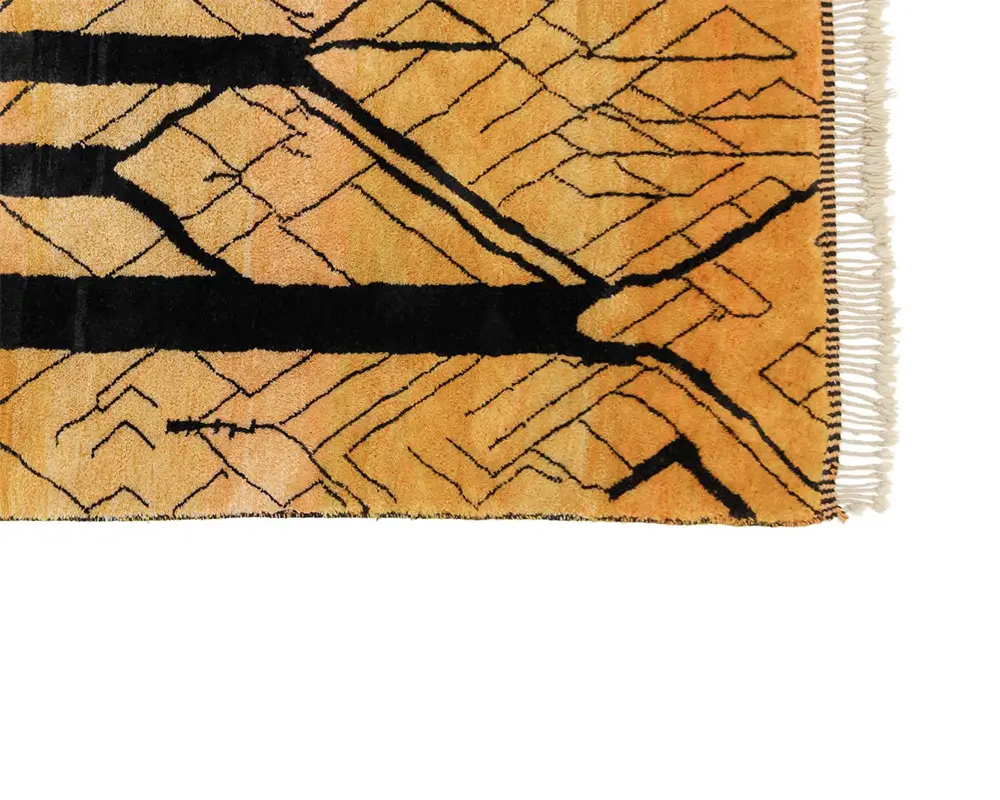
Azele Studio. Handmade rugs. Moroccan rug patterns. Orange an black rug with a tree.

The following are among the most widely used Berber rug symbols, often layered together to enrich a rug’s meaning:

Tree of Life: Represents the bridge between earth and sky, family lineage, and eternal renewal.

Star: Signifies hope, guidance, and celestial blessing.

Pomegranate: A fruit of fertility, nourishment, and abundance.

Eagle: Power, perspective, and spiritual vision.

Ram’s Horn: Virility, strength, and heroism.

Elibelinde: A stylized female figure symbolizing womanhood, fertility, and grace.

Eye: A watchful protector warding off envy and misfortune.

Hand of Fatima (Khamsa): A palm-shaped talisman offering protection and divine favor.

Barley / Wheat Sprigs: Linked to seasonal fertility and agricultural prosperity.

Fishbone: Symbol of sustenance, survival, and ancestral connection.

Rosette / Starburst: Expressions of light, guidance, or sacred geometry.

Birds or Horned Animals: Intermediaries between earth and spirit; bringers of messages or fertility.

Talismanic Bands: Horizontal rows of protective shapes woven with ritual purpose.

These symbols often speak in layers: one rug may blend joy and mourning, birth and protection, memory and aspiration.
Weavers as Storytellers: Crafting Emotion in Wool

A Moroccan rug is not just a functional object—it is a story written by hand. Women who weave bring their lives to the loom: honoring a new union, mourning a loved one, blessing a child. Each choice—from motif to layout to color—is a decision driven by intention.
In this sense, rugs are emotional topographies. They hold presence, resilience, and ancestral knowledge. Rather than decoding them literally, we are invited to feel them with curiosity and respect.

Across the Mountains: Regional Dialects in Design

Visual languages vary by region, creating distinct “dialects” across Morocco:

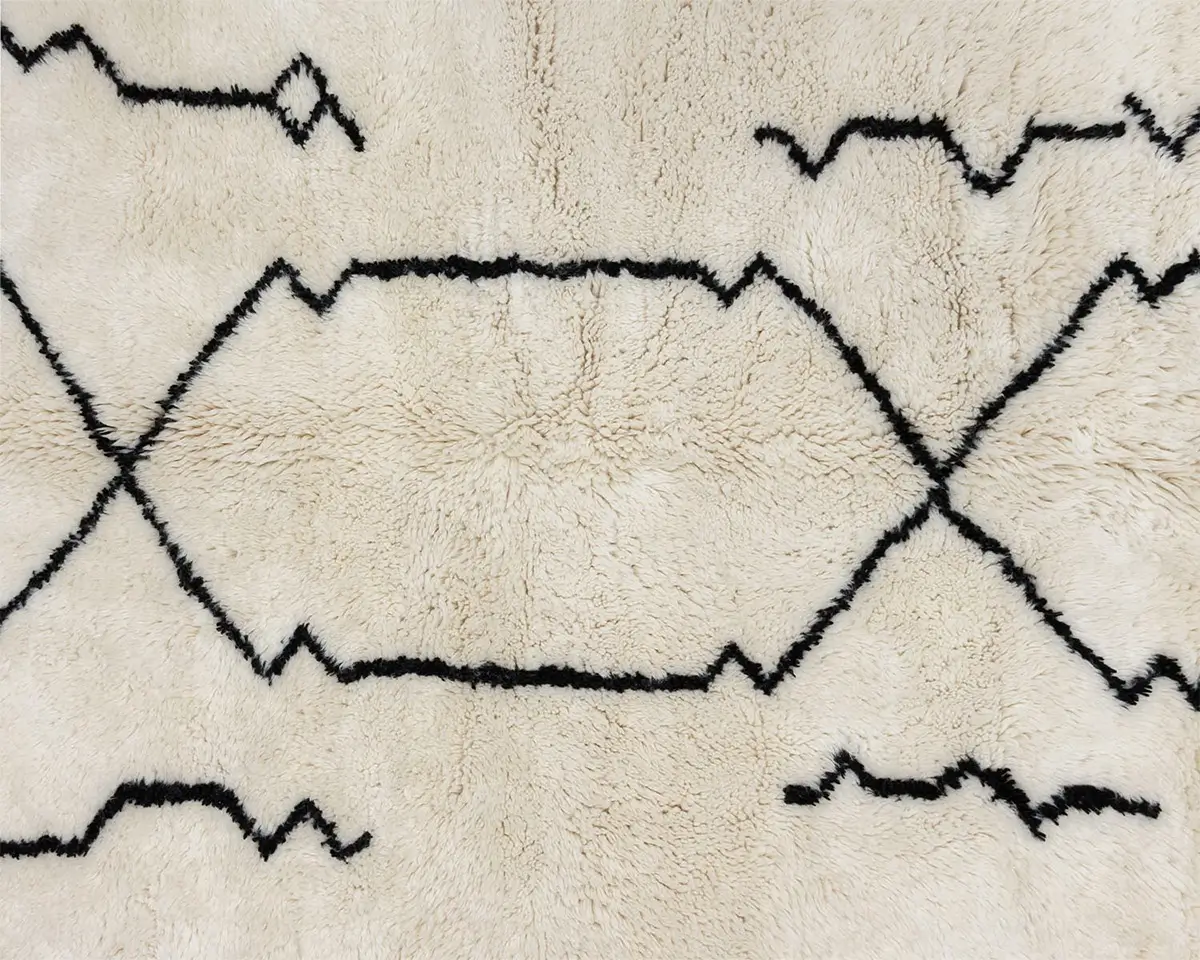
  • Beni Ourain – Neutral-toned with minimalist geometric forms; symbolic of purity and subtle protection.
  • Azilal – Bright, asymmetrical, and playful; reflect personal expression and spontaneity.
  • Boujad and Rehamna – Bold hues and complex symbols; rugs that tell vivid and layered stories.
  • Zanafi – Flatwoven and rhythmic; known for their directional stripes and coded structures.
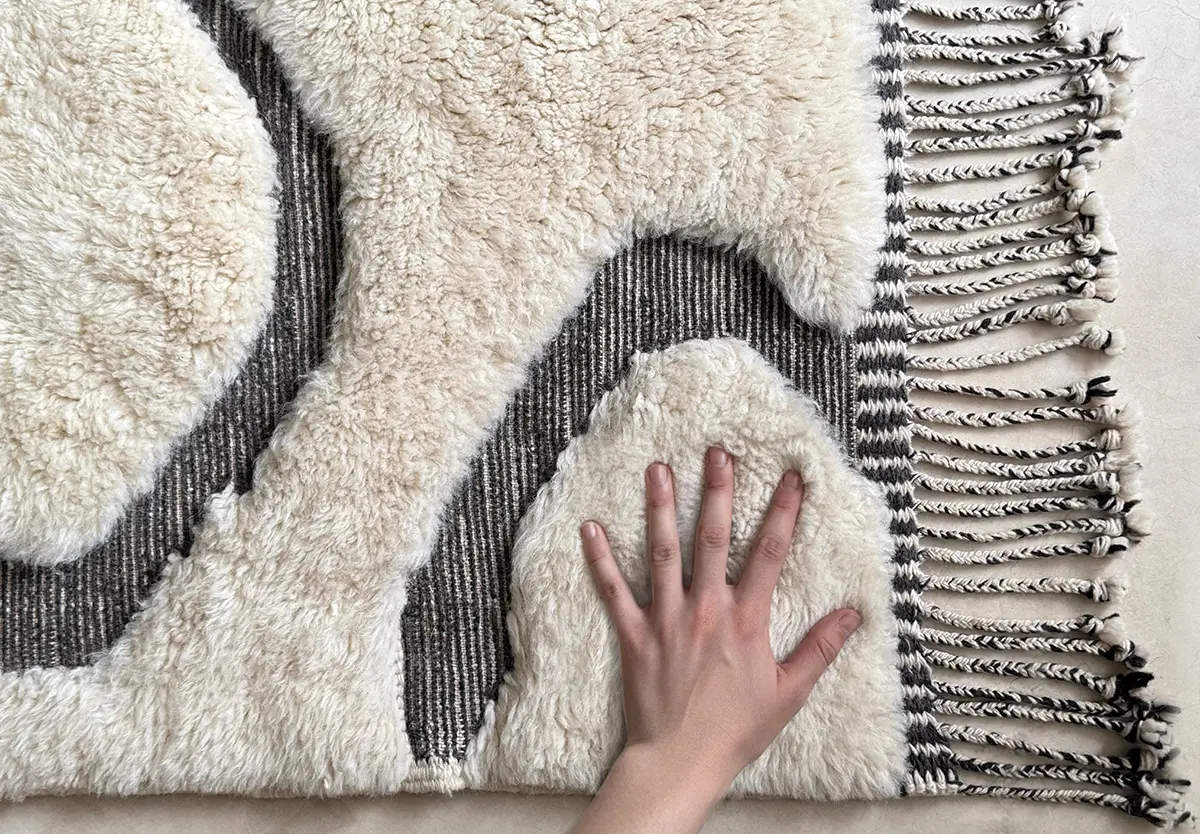
  • Mrirt – Luxurious and high-density, Mrirt rugs often preserve ancient forms within refined modern layouts—each knot carrying echoes of ritual, protection, and ancestral memory. Woven from exceptionally soft, high-grade wool and crafted in limited quantities, they are among the rarest and most esteemed Moroccan rugs.
  • Kilim (Hanbel) – Lightweight and versatile; feature linear motifs and used as both textile and decor.

These regional styles speak not just to geography, but to the worldviews and rituals of their makers.

Reading Rugs as Living Texts

To see a Moroccan rug clearly is to recognize it as more than craft—it is a memory made tactile. These Moroccan rug patterns reflect stories, symbols, and spirits passed from hand to hand, generation to generation.
Let your space reflect not only beauty but lineage, resilience, and reverence.

Moroccan rug patterns and meanings, Berber rug symbols, Moroccan rug motifs, Beni Ourain patterns, Azilal rug designs, Boujad rug symbols, Mrirt rug patterns, Zanafi weaving, Moroccan kilim patterns, tribal rug symbols, lozenge symbol rug, diamond motif Berber, tree of life rug, hand of Fatima rug, evil eye protection rug, geometric Moroccan rug, traditional Berber weaving, Amazigh rug symbols, ram horn motif, fertility symbols rugs, protective rug symbols, Moroccan weaving traditions, handwoven rug meanings, Atlas mountain rugs, symbolic rug designs, artisan rug patterns, Berber women weavers, Tifinagh alphabet rugs

Magazine